

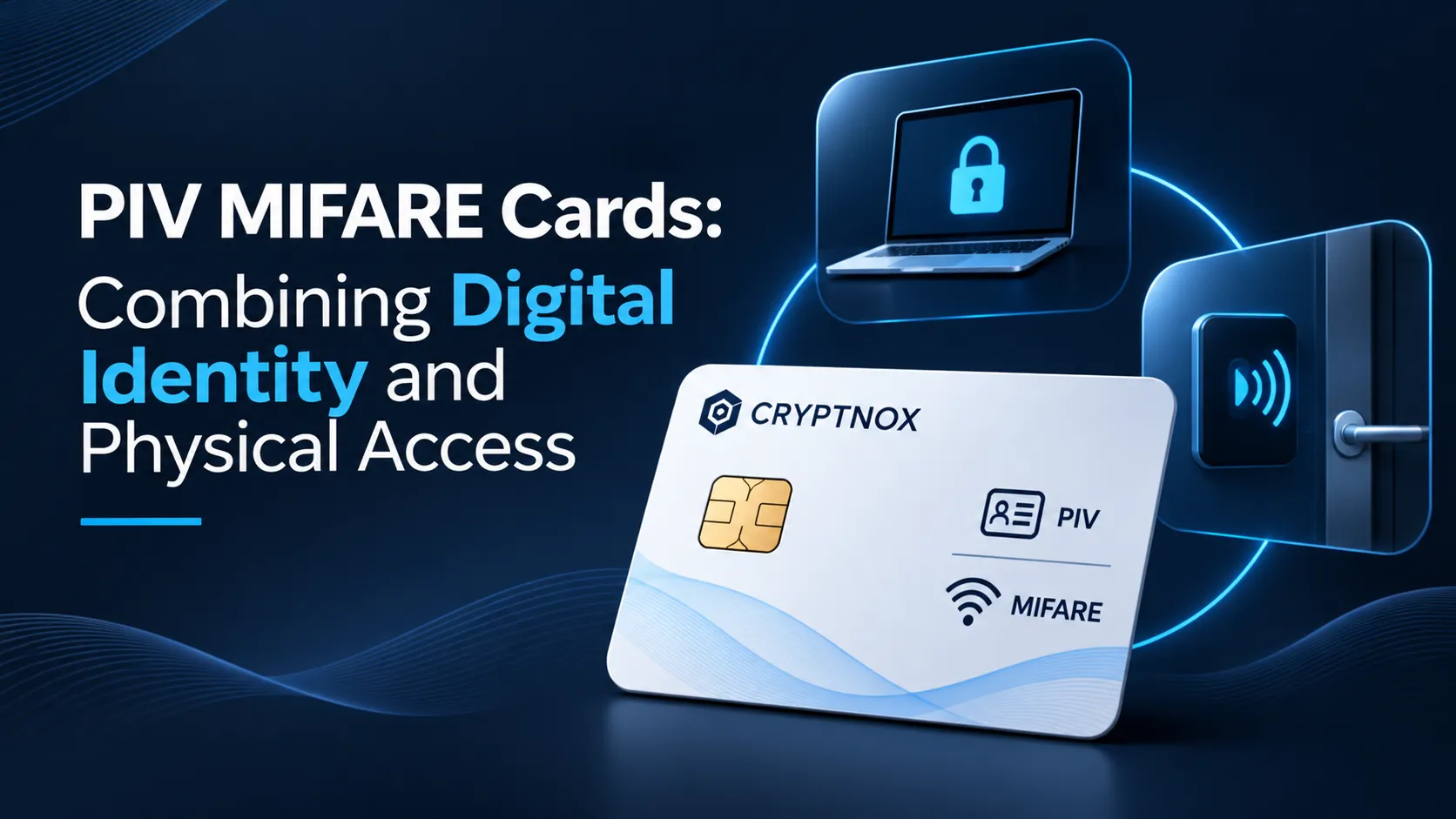
A PIV MIFARE card combines two important areas of enterprise security: digital identity authentication and physical access control. By bringing compatible smart-card technologies together in one credential, organizations can potentially use a single card for accessing secured computer systems, authenticating digital identities, and entering authorized buildings or facilities.
Traditionally, employees have carried separate credentials for office entry and IT authentication. This creates additional administrative work and requires organizations to manage multiple access systems. A PIV MIFARE smart card offers an approach to consolidating these functions while maintaining their distinct security mechanisms.
For enterprises, government environments, educational institutions, and organizations with restricted facilities, understanding how these cards work is essential when planning a converged identity strategy.
What Is a PIV MIFARE Card?
A PIV MIFARE card is a smart-card credential designed to combine PIV-compatible digital identity functionality with MIFARE-based contactless applications.
PIV stands for Personal Identity Verification. It is associated with a standardized approach to identity credentials, particularly in US federal environments. PIV-compatible functionality uses digital certificates and cryptographic authentication to verify users accessing supported IT systems.
MIFARE is a family of contactless smart-card technologies commonly used in physical access applications, including building entry, identification, and access management.
Combining these capabilities allows a compatible card to support different authentication requirements through a single physical credential.
A typical implementation may include:
-
PIV functionality: Supports certificate-based digital identity authentication.
-
MIFARE functionality: Supports compatible contactless physical access applications.
-
Cryptographic security: Uses supported security mechanisms to protect authentication credentials.
-
Multi-application capability: Allows different applications to operate within the same card architecture.
A PIV MIFARE smart card can therefore be relevant to organizations looking to consolidate physical and logical access credentials.
It is important to distinguish between PIV-compatible commercial products and official government-issued PIV credentials. Supporting PIV functionality does not automatically make a commercial card an officially issued government PIV credential.
How Do PIV and MIFARE Technologies Work Together?
Although PIV and MIFARE can exist within the same physical card, they serve different purposes and use different authentication mechanisms.
1. PIV for digital identity authentication
PIV functionality uses public key infrastructure (PKI) and digital certificates to establish user identity.
An employee may use a compatible card to authenticate to a corporate computer, VPN, or enterprise application. The system verifies the certificate and requires proof that the user controls the associated private key.
Depending on the implementation, the private key is protected within the card and used for cryptographic operations without being directly exposed to the connected computer.
This approach can strengthen authentication compared with password-only access.
2. MIFARE for physical access control
MIFARE technology supports contactless communication between a smart card and compatible readers.
For example, an employee approaching an office entrance can present the card to a door reader. The access control infrastructure processes the card’s supported credential or application data and determines whether entry should be granted.
The exact security level depends on the MIFARE technology, card configuration, reader compatibility, and access control system.
Not every MIFARE implementation provides the same security properties. Organizations should select appropriate technologies and authentication configurations rather than assuming all contactless credentials offer equivalent protection.
3. One credential for two environments
The main advantage of combining these technologies is credential consolidation.
An employee could use the same physical card for:
-
Entering an authorized office or restricted facility.
-
Logging into a supported workstation.
-
Authenticating to enterprise applications.
-
Accessing compatible remote network services.
However, the physical access and digital authentication systems remain logically distinct. A successful door-access transaction does not automatically authenticate the user to a computer, and PIV authentication does not automatically authorize entry into a building.
What Are the Benefits of a Logical and Physical Access Card?
A logical and physical access card can simplify credential management while supporting different enterprise security requirements.
Reduced credential complexity
Employees do not need to carry multiple cards for different access environments when the systems and credential technologies are compatible.
This can make daily access more convenient and simplify credential issuance.
Stronger digital authentication
PIV-based certificate authentication can reduce reliance on passwords for supported systems. Cryptographic authentication requires access to the relevant private key, making password theft alone insufficient to reproduce the authentication process.
Additional controls, such as PIN verification, endpoint security, and certificate validation, further contribute to the overall security architecture.
Centralized identity administration
Organizations can integrate card issuance and lifecycle management with existing identity and access management processes.
When an employee changes roles or leaves an organization, administrators can update permissions, revoke certificates, and disable physical access credentials through the appropriate systems.
These processes must be coordinated because digital certificates and physical access permissions may be managed by separate platforms.
Better access visibility
When properly integrated, physical access and logical authentication systems can provide administrators with clearer visibility into credential usage.
This can support security reviews, access audits, and investigations, subject to appropriate privacy and data-retention policies.
Where Can PIV MIFARE Cards Be Used?
A converged identity credential can be useful in environments where employees require both physical and digital access.
Common applications include:
Corporate offices: Employees use contactless credentials for building access and PIV-compatible authentication for corporate computers.
Government facilities: Organizations can evaluate compatible credentials for environments requiring controlled physical entry and certificate-based digital authentication.
Educational institutions: Staff and authorized personnel may use consolidated credentials for campus facilities and supported IT systems.
Healthcare environments: Employees may require controlled access to restricted areas alongside secure authentication to compatible information systems.
Enterprise data centres: Administrators may need both physical authorization to enter secure infrastructure areas and strong digital authentication to access management systems.
Each deployment requires an assessment of applicable security standards, privacy requirements, infrastructure compatibility, and organizational policies.
What Should Organizations Consider Before Choosing a PIV MIFARE Card?
Selecting a suitable card requires more than checking whether it supports both technologies.
IT and security teams should evaluate the following factors:
-
PIV compatibility: Confirm support for the required PIV applications, certificate profiles, and authentication workflows.
-
MIFARE compatibility: Identify the exact MIFARE technology and confirm compatibility with existing access readers.
-
Cryptographic capabilities: Review supported algorithms, key protection mechanisms, and certificate management requirements.
-
Reader infrastructure: Check compatibility with contact, contactless, and NFC interfaces where applicable.
-
Access management: Establish clear processes for issuing, updating, suspending, and revoking credentials.
-
Security policies: Ensure physical and digital access permissions are managed independently where required.
Cryptnox offers smart-card solutions designed for digital identity and other compatible applications. Organizations evaluating a converged identity smart card should review the product’s current specifications and confirm that its supported PIV and MIFARE functions meet their particular deployment requirements.
Conclusion
PIV MIFARE cards bring digital identity authentication and contactless physical access capabilities together in a single credential. By combining PIV-compatible certificate-based authentication with MIFARE functionality, organizations can explore a more consolidated approach to enterprise identity and access management.
The primary benefit is not simply carrying fewer cards. It is the opportunity to manage physical and digital credentials through a more coordinated security strategy while retaining separate authorization controls for each environment.
Before implementation, organizations should verify card specifications, reader compatibility, certificate requirements, and access management procedures. With appropriate planning and infrastructure integration, PIV MIFARE smart cards can become a practical component of a broader enterprise security architecture.